Yes, we are merging conversations here… 6’ is very strong indicator of Vo2max and a very reasonable effort to base the rest of your training off of. I much prefer a 6’ to a 20’ 6’ is actually very similar to a ramp test as you also have about 6’ above FTP in most cases.
I don’t know why I feel this way but my guess is in your case your CP is a bit higher than 170 and W’ a bit lower that 22kj maybe 180/20 but that is completely a guess. I don’t think you do TT races so you are not likely to get a perfect eFTP calculation and eFTP is not equal to CP when you get into the math but none of this really matters and is splitting hairs. RPE is an excellent choice
“They have it all wrong” is the title and then she basically agrees with with Polarized training for the most part. That’s a turn off for me…
She also says it it’s for people doing higher milage and she agrees with Seiler, yet Seiler shows it works for cyclists doing 6 hours a week and I would equate that to runners doing 3-4 hours a week not high milage.
I do agree with the core message of “it depends”… She said beginners just run, don’t over think it. Again that partially depends, aging beginner/returning athletes don’t have as much flexibility as young athletes and I would say I see many beginner runners out there going way faster then they should and looking like they are on the road to burnout or injury… so people need to understand (especially runners) that going slow will produce results and they don’t need to go so hard, be comfortable. So again I think her message is wrong. I did not fully focus on every detail she presented.
I sound like I am disagreeing with her but I am actually not
I agree with the fundamental concept that she is trying to present (but could do it better) which is have fun, get consistent, polarized training is not some magic bullet that solves everyones problems.
For others that don’t want to watch it here is AI summary of what it says.
Based on the YouTube video, here is a summary of Phily Bowden’s key points regarding the advice to “run slow to run fast”:
Why “Run Slow to Run Fast” Works
It’s based on the polarized training model (80/20 rule) [01:30].
It develops aerobic capacity by improving the body’s use of oxygen [01:54].
Easy runs build more mitochondria in your cells [02:11].
It improves fat oxidation, saving glycogen for faster efforts [02:22].
It allows for optimal recovery, reducing the risk of injury and overtraining [02:35].
When This Advice May Not Apply
It’s generally for higher-mileage runners (four to five or more days a week) [03:00].
It may not be the best approach for beginners [04:12].
Beginners might misunderstand and not get enough stimulus to improve their fitness [09:24].
How to Tell if You’re Running Easy Enough
The Talk Test: You should be able to speak in full sentences [14:44].
Rate of Perceived Effort (RPE): On a scale of 1 to 10, your effort should feel like a 3 or 4 [15:21].
Heart Rate: Aim for Zone 2 (60-70% of your max heart rate) [15:43].
Recovery Cues: You should feel like you could have kept going after the run [16:04].
Mental Cues: An easy run should make you feel better than when you started [16:24].
Pace: Your easy pace should be at least 90 seconds slower per mile than your threshold pace [17:34].
I think you are being a tiny bit too harsh on her Alex in your commentary, but the AI “TLDW” summary is great.
As she says, she is kicking a hornets’ nest. Polarized has been pushed hard and effectively in recent years. Countering that in a well reasoned way that is acceptable to the audience isn’t easily achieved.
But it is useful and helpful to the broader discourse to try.
I do think it is correct that a lot of beginners / lower volume athletes that are following a polarized training regime would have better outcomes from a different approach.
Also defining the easy sessions is way easier than defining the optimum hard sessions - they structure of the hard sessions has to change depending on goals, fitness etc.
Just jumping on the trainer to do 4x 8 minutes @108% twice per week forever isn’t the answer, is it?
That said, whatever it takes to get people out there training is good with me. If that is someone belieivng that polarization should be applied to their one hour per week training, they should go ahead and do it.
I don’t know anything about her. I do fully agree with what you are saying. It’s not that Polarized training is some magic bullet and I see so many beginners showing up on reddit thinking that is what then need to do. That is a complete mistake.
If she said “Why polarized training is only 1/2 right” or maybe “Why polarized training is likely wrong for you.” as the title then it would have totally changed my opinion on the video. It’s like if I created a video and said. “Why cycling is the worst thing for peoples health.” and proceed to talk about all the good things about cycling…
Maybe she needed to say that to get people attention. I just don’t like blatant misinformation. The content of the video itself is ok. She is probably a good coach.
Regarding:
“I do think it is correct that a lot of beginners / lower volume athletes that are following a polarized training regime would have better outcomes from a different approach.”
I don’t think many beginners do polarized training, meaning it’s too hard for them to actually do easy, walk uphill and push the bike (or walk while running)… And few are going to go do 4X8s… I fully agree it would be poor advice to suggest his exact “polarized” to a beginner.
Seiler always says to try to do mostly easy and a bit of hard. His daughter does “polarized” and it’s like 3 days a week of hard
It very questionable to suggest that mostly easy is bad advice or that something else would be superior for results (4x8 is very questionable). Meaning there is nothing even close to proof that easy is not good advice and results would be highly individual.
Mostly easy is a safe approach and in running especially in the beginning safety should be given a very high priority. A significant number of runners get injured and partially because they do too much hard too soon (my opinion) so staying injury free is going to produce far better results.
Cycling we have more flexibility but still mostly easy is not bad advice in the beginning but I agree mostly fun and don’t worry about it is better advice.
I guess people look at his study and think it must be 4x8 (that is just some 1 off study…). This is a mistake. But if you listen to his advice it much better.
She is guilty, with the title of this video, of click baiting. Not the most heinous of crimes, but the title is definitely worded to get clicks.
It worked on me(!), I’ve never heard of her before. That said, she is a legitimate 2h25’ marathon runner (Berlin 2024) and finished 11th in the 2025 women’s elite London Marathon (fastest British woman).
The hard workouts in a polarised plan are intended to be hard. Really hard in most cases. In part, that is why the easy days need to be easy - to make sure the athlete is ready for the hard days. Meeting that requirement becomes something that needs a a bit more thinking about as the training volume increases.
The only issue I have with “mostly easy and a bit of hard” especially for beginners, is that hard could do with a clear definition and a more solid connection to progression.
The easiest approach to doing it correctly can be bundled in a couple of words: "Never go harder or longer then what you can sufficiently recover from to correctly do your next planned workout’.
Skipping one planned workout is immediately going to influence your total work a lot more then doing a bit less then what you could have done.
In the long run, total work done is what makes you excell.
Adapt the above to your actual fitness and goals, and you have a winner.
Yes 100% agree with you on progression. I think Seiler again has more variability in what is hard. He says in some videos sweet spot is hard (obviously it can be). So again it’s a difference of defining polarized by what he used in his study (had to pick something) vs the message he suggests. I am not saying his advice is the best for everyone either. I guess I just see this more from the easy side focus and you see it more from the hard side focus. We are both 100% on the same page that blank statement everyone should do polarized training is bad advice.
Yes, no doubt in her skills (I saw that), and my guess is she coaches aspiring stars rather than 1/2 broken down old guys I talk to many different coaches so I see there is a big difference in perspective based on who they spend the most time coaching.
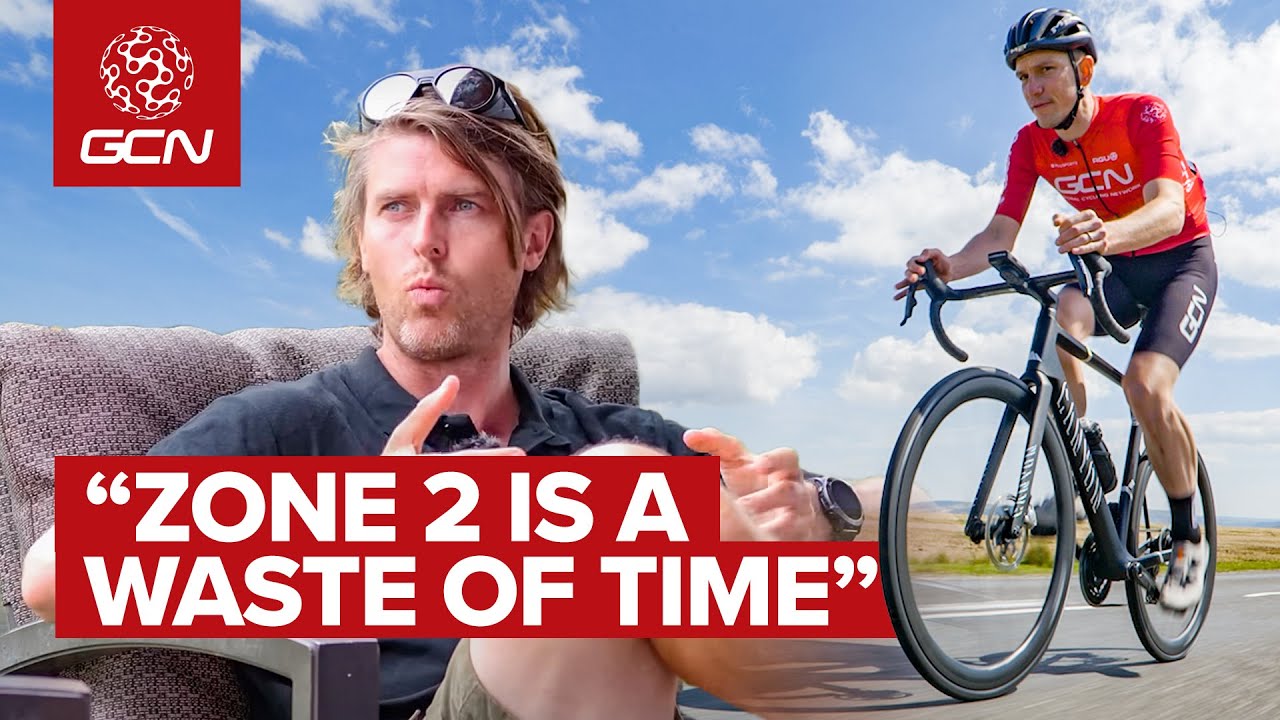
Great answer @MedTechCD and, at the risk of linking to another video with a click bait title (even more click baity than the previous one!) that then goes on to have decent content, here is Olav Aleksander Bu on GCN shortly before he joined Uno-X in a coaching role, saying pretty much exactly the same thing.
Yes I agree this the perfect answer, so we are all in agreement. The only downside is normal people have no idea what this means. Even for me personally I often struggle with it even though it’s what I do or attempt to do. That mostly means zone 1 every day and skip hard all together
I don’t think you could do only zone 2 and with the TDF… That was enough for me to end the video That’s like saying you probably can’t only eat ice cream for 6-months and with the TDF…
Coach Andrea (my partner) coached Cadel Evans to win the TDF back in the day and many other top pros and they never used what we are calling zone 2 these days… guys spent a lot of time in z1/z2 but it was not really part of the prescription per-se. But again z2 and 250w is different than z2 at 100w. I was always trying to convince Andrea that pure Zone 2 was valuable and he was never so sure. Now I will say he came back from TDF last year and said talking to the riders and coaches I believe Zone 2 is likely making these guys climb stronger.
But still who really cares what it does to the pro peloton or elites. Higher intensities induce higher stress and when taken too far is less healthy than the right amount of stress or slightly too little. To @MedTechCD 's point it’s all about your personal breaking / recovery point. It’s better to be a little under trained than a little over trained and since most people don’t know where that is, zone 2 is usually not bad advice but for sure it’s a big obsession that is over-rated.
Good point. As you can see, I get turned off easily by poor word choices especially in the title and the beginning of a video.
Here is the AI summary (below). I agree totally with the summary, that Zone 2 has turned into marketing and my small edit would be it’s only a magic bullet when it’s the the tool you are missing and needing.
Dylan Johnson says the same. No proof that Polarized is better than pyramidal (again I agree). Andrea would say the same. Coach Jack fully agrees. It’s more just giving people the option that “hey easy training might be good for you.” Or easy training can be healthy… not a generic magic bullet.
Critique of Zone 2 Training:
He sees Zone 2 training as a “marketing concept”.
While it can be effective for promoting consistency in beginners or those returning from a break, it is not a “magic formula”.
He believes that exclusively focusing on Zone 2 will eventually lead to a plateau in performance.
The Nuance and Complexity of Training:
All types of training, regardless of intensity, affect the body’s systems, including the cardiovascular, respiratory, and neurological systems.
The most crucial factor for improving performance is consistency over a long period of time, not the specific training method.
He advocates for a holistic approach, considering the athlete’s full life context, not just their training sessions.
Proposed Alternative for “Time-Crunched” Athletes:
For those with limited time to train, he suggests a varied approach that includes a mix of low, medium, and high-intensity work.
He introduces the philosophy of “intervals in reserve”. This means an athlete should finish an interval session knowing they could have performed at least one or two more intervals with the same high quality.
This approach is designed to maintain training consistency and prevent burnout, as it avoids pushing the body to its absolute limit in every session.
The goal is to maintain motivation and ensure the athlete can return to their next session feeling energized and ready to perform.
I also could see how people could get really turned off by the term “zone 2.”
I hate the term “junk miles.” It makes it sound like some specific form of cycling training is bad, and anything I believe is bad is junk miles. I have heard Frank from Fascat use this term. I like and respect Frank and have actually had a lot of discussions with him but I still don’t like this term. Now for any given individual there is better training and worse on any particular day and rest days are needed but as an outsider calling any particular training junk would be wrong in my opinion.
There’s a girl on Youtube who recently did a ride for charity where she rode every stage of the men’s TDF plus the transfers.
She wasn’t racing so she could ride Z2 most of the time plus whatever power it takes to get up the climbs so I’m sure there to be some level of intensity on the Tourmalet for example.
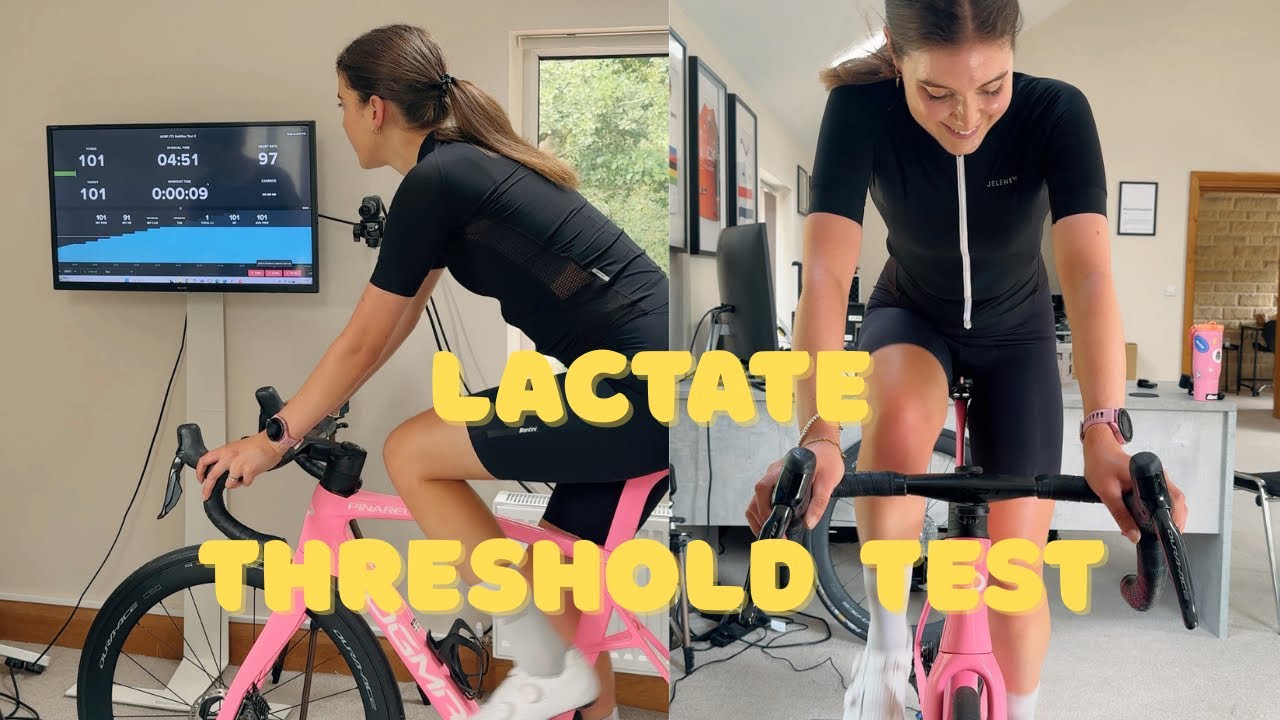
What do you think happened to her fitness, particularly lactate threshold?
Shocker, lactate threshold went down!
Previously she was working with a coach doing intervals, long rides, etc… to get ready for this epic challenge. Then when it is over her LT1 is awesome, but about the same as it was before, but LT2 went down.
It is a long video and has a silly element to it, but I thought it it worth sharing. Endless Z2 isn’t everything and more isn’t always more.