MLSS is a much better descriptor than FTP - the border between stable and unstable physiology.
Dave
MLSS is a much better descriptor than FTP - the border between stable and unstable physiology.
Dave
But yes in theory FTP means aerobic level, it’s just not perfect for measuring your own aerobic improvement. Maf test is clearer although FTP test is more useful for other things.
I think it is better than FTP from an accuracy standpoint, but I wonder if it really measures aerobic improvement. Lactate again is about your body being good at clearing lactate and that likely happens from a lot of threshold training (not sure on that, Andrea would know, working a lab and testing people all the time)
I’m just trying to understand how the FTP can go down if MAF goes up. If we all agree that it’s not possible we can close this point.
By keeping all variables the same I can’t see how rider A outperforms rider B if the latter has a better aerobic level (and both have no anaerobic capacity left).
real FTP, meaning riding all-out for 1 hour, cannot be better for rider A if rider B has a better fuel usage (read: he can use fats better than rider A)
If you populate your power duration curve WK05 will give aerobic / anaerobic estimates for each duration.
All of this is way beyond my needs though, ride a bike and smile. You smile more in hour 3 or hour 4 if you are more durable and suffer less…
Dave
FTP test can go down without specific training. FTP is a test, it’s not some other magical concept. If you only do 20 minute rides but have very high aerobic level, you will suck at any form of FTP test.
I used to do lots of wko3/4 and 5… but intervals, golden cheetah… all have enough info. Really we are talking about durability and specificity here, that is not so easily measurable.
I don’t have time to argue the point but at world tour level FTP is almost insignificant, what you can do after hours of racing is what matters…
The goal for them is power after banking X kJs, that is real durability and they train it specifically.
Think MVdP, does he win with FTP or something else?
Dave
All these things play a huge roll.
FTP gets you in the game. Lots of times guys with much lower VO2max beat guys with much higher VO2max. Some pros are in the 60s and some in the 90s… most are 80s. They don’t really do FTP tests so FTP is just an estimate/guess.
Two guys of similar levels, at similar race periods
Chris Boardman, who reportedly had a VO2max around 70-72 ml/kg/min
Greg LeMond famously tested at 92.5 ml/kg/min
TT races are more influenced by watts, aerodynamics and watts/kg and strategic pacing. (more weight to aerobic performance)
Think about the nature of the effort required to do the “hour of power FTP” test.
Compare that to the effort required to complete an hour or two of MAF work.
The requirement to work so far above the MAF metabolic level is so significant that without specifically training it (both mentally and physically), the FTP can (will) reduce.
A 3 month block of MAF only work is long enough for that to happen.
You wrote: “real FTP, meaning riding all-out for 1 hour, cannot be better for rider A if rider B has a better fuel usage (read: he can use fats better than rider A)”
Why would rider A (or rider B for that matter) go into and through the test without guzzling down the correct fuelling/hydration to complete the test with the best possible outcome?
I would even go so far to say that fat usage ratios is not very connected to 1 hour power. I am a fan of increased fat usage, many health and other benefit but for the most part keto guys are not going to perform better than high carb guys in a 1 hour test, even though fat usage is much better.
I also would give up on the idea of real ftp, this is similar to saying the real god… Long term it’s all about personal aerobic improvement. I feel maf test is superior for this but an ftp test is a reasonable proxy.
Why would rider A (or rider B for that matter) go into and through the test without guzzling down the correct fuelling/hydration to complete the test with the best possible outcome?
even by fueling properly the FTP test will use all your glycogen stores because it’s very long. It’s exactly like in a marathon, it’s too long to be run on glycogen. Only people able to properly use fats can have better results.
I would even go so far to say that fat usage ratios is not very connected to 1 hour power.
why not?
when glycogen stores are empty you can only use fats. And, as Maffetone says, if those are really empty also fat usage slows down because mitochondria needs also glycogen to transform fats in energy/atp.
Everyone uses a percentage of fats. You just need enough fuel to get you through the hour. Most athletes likely to use around 10-25% fat in 1 hour and the optimum keto guy might use 40%. It’s not going to make him faster just because he uses more fat and is more fat adapted.
Generally keto guys do better in ultra events that are mostly zone 2 and not so well in higher intensity such as sustained FTP intensities. Higher intensity is more carb dominant.
So increasing fat usage in theory increases performance, and I believe it does but more from the adaptions that occur and this is connected to increase aerobic performance.
So this is all a side track…  What is the point of all of this?
Meaning improve your base (aerobic performance) then when you add durability/specificity to it your FTP TEST will improve. You can and should improve your aerobic base by improving your fat utilization. It’s better to just forget about “real FTP” because it does not exist.
FYI: Coggan acknowledged that FTP isn’t actually a “60-minute power” for everyone. It’s more accurately the power at your lactate threshold/maximal lactate steady state, which happens to correlate with ~60 minutes for average trained cyclists. The same as Dave said.
He suggests
Since almost no one knows what their MLSS is, and it can change daily depending on many factors… let’s just assume it is like talking to Jesus.
“It’s not going to make him faster just because he uses more fat and is more fat adapted.”
yes and no. If you can use more fats when your glycogen stores are depleted you can continue to run/ride (so in the end you’ll be faster of your competitor that stops on the sideline)
So increasing fat usage in theory increases performance, and I believe it does but more from the adaptions that occur and this is connected to increase aerobic performance.
Yes, exactly. I never said the opposite. Increasing aerobic performance also means increasing fat usage as fuel (instead of glycogen) because you develop a better capillarization, increase mitochondria density etc.
FTP was just a bit offtopic, but I was trying to say that increasing aerobic performance in the end will also improve your ftp. Like allowing to people running the marathon to run/last few minutes at higher speed anaerobically (because they used glycogen stores less)
Yes more fat adaptions has significant benefits to long or ultra events, if we remove FTP (i.e. test) from this discussion we are much more in alignment.
Very soon you will have your own n=1 result to consider.
Perhaps you will come back and tell us if / how your FTP changes at the end of this 3 month block of MAF work.
And then again when you have done 6 - 8 weeks of training with some higher intensity workouts back in the mix.
I’ll guys! tnx for your points of view
for now most complaints come from Garmin 


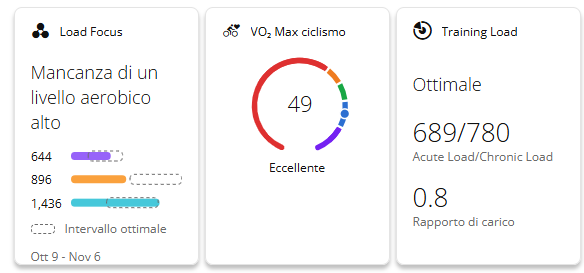
Garmin contacted me and said they are considering disabling your bike computer if you continue this nonsense…
I was joking ehehhe I stop 