Rehab doing heavy strength training to rebuild endurance

I am currently undergoing rehabilitation following a fracture of the upper ankle joint (a displaced fibula fracture and a splinter fracture of the medial malleolus, as well as a tear of the syndesmotic ligament). It was a blessing in disguise that the accident happened in the mountains in Austria, as I was immediately operated on by doctors who specialise in bone fractures. I can also wholeheartedly recommend taking out international health insurance, as the helicopter flight to hospital cost around 6,000 euros. It was outside the ski season and I had surgery just 60 minutes after the accident; everything went really well. So my body is now the proud owner of a titanium plate and ten extra screws. Nevertheless, this meant just under 7 weeks of being restricted to a maximum load of 15kg on my right leg.

Now, three months after the accident, everyday life is nearly back to normal, but I’m still building up my strength and might take a different approach to regaining my former cycling fitness.

A brief recap: before the accident, I had an estimated FTP of 3.8 W/kg. My aerobic threshold was somewhere around 2.8–2.9 W/kg. In winter, I trained for around 7 to 10 hours a week; in spring, 10 to 15 hours a week. The sessions consisted almost exclusively of Z2 sessions with tempo intervals on mountains and hills. I went for a swim now and then, but otherwise I hardly did any other sport.

For the time being, I’ve taken all major cycling marathons off my list of goals. These very long events require a lot of time on the bike, which I don’t want to sacrifice for the time being. Perhaps I’ll look for other, shorter events, or time trial/mountain time trial events. We’ll see. In any case, I currently need to spend time in the gym to rebuild the muscle I’ve lost. Whilst I’m at it, my upper body is also in desperate need of a workout.

So what’s the plan? At the moment, I’m doing full-body heavy strength training three times a week, always taking the last set to failure. Interestingly, my legs are hardly sore at all the next day, whereas I can feel it in my upper body every single time. I’ll definitely be continuing with this over the next few months. My plan also includes low-intensity sessions in the form of one swim a week with the kids, at least 7,000 steps a day, and around 3–4 hours of commuting a week by bike or cargo bike (to work, for shopping, and to pick up the kids). I’ll also be doing short, intense HIIT sessions twice a week on the indoor trainer, starting next week. Of course if I am too tired, I’ll skip them.

My cycling performance, measured in terms of FTP, was perhaps 2 W/kg on my first few rides and is now, six weeks on from those first rides, possibly 2.5 W/kg. These are all just estimates, as I haven’t done any FTP tests yet.


TLDR: Three months after an ankle fracture I’m rebuilding my fitness, doing heavy full‑body strength training plus light aerobic work and short HIIT. Long rides are off the table for now; focus is on getting strength and cycling fitness back in parallel.

Has anyone combined heavy strength work with cycling and how did it affect your power and endurance?

I will post my journey and findings over the next weeks and months, if interested.

1 Like

I’m sorry to hear about your injury. It is good to hear you are recovering well.

Dave

Thanks Dave,

I began quite quickly to look at the whole situation as positively as possible, and I’m motivated to work actively and intensively on my rehabilitation, whilst perhaps trying out different approaches and training methods along the way.

I knew that strength training could be beneficial. But in reality, I’ve never done any heavy strength training, preferring endurance sessions instead. As a data nerd, I’m looking forward to my little n=1 study.

The question I’m still asking myself is how best to measure my progress. Normally, I look at efficiency but that’s inflated by the HIIT sessions. I still need to think about whether to incorporate regular tests, in whatever form.

When you say heavy strength training, my beliefs, align, more like Ripetoe. He’s kind of a redneck American with a strong opinion. But it really seems like most people that gets really strong, feel that his approaches reasonable. Heavily focused on low bar full deep squat. I think strength training should focus on these large compound movements. Squat, dead lift, could be pull up, bench press. The strength guys call things like bicep curls or tricep push downs, auxiliary.

You really only need three or four big compound exercises and nothing else. Auxiliary are unnecessary unless you have specific bodybuilding goals or something else. The big compound ones make your full body way stronger.

Maybe you know all this. I don’t really know how strength training and rehabilitation work. I personally would only do zone two aerobic until you’re completely healed plus strength training. So I wouldn’t do HIIT. Zone two you can hold onto your aerobic stuff. You’ll lose top end power but your higher intensity stuff will come back really quickly if you keep your base.

Ultimately you want to do less work total to give your body more energy for repair and because it’s in a stressed state. My 2 cents with limited knowledge on rehab specifically.

Thanks, Alex.

Just to be a bit clearer: which activities are permitted should always be discussed with your physiotherapists and doctors. My recovery process is complete. The bones and the syndesmotic ligament have been fused back together for 8 weeks now, and my rehabilitation programme to rebuild strength and function began roughly 7 weeks ago. This included lymphatic drainage, joint mobilisation, strength exercises and stability exercises. At the same time, I’ve started Zone 1 on the trainer and walking exercises.

What’s missing right now, and what I mean by ā€˜current rehab’: in the phase without putting any weight on one leg (between the injury and the start of official rehab) you lose an incredible amount of muscle. In my case, that was 5 cm in thigh circumference and a total of 2–3 kg in the leg. Naturally, I haven’t built that back up yet. The only limiting factor at the moment is any pain I might experience.

It’s certainly not advisable for anyone to start HIIT or heavy strength training straight away when rehabilitation begins.

At this stage, strength training is absolutely essential for rebuilding the muscle mass I’ve lost. And yes, I completely agree with you that you don’t need many exercises to work out your whole body. What I actually mean by ā€˜heavy’ is performing the exercises to failure. So, for example, not just doing 10 push-ups and calling it a day, but carrying on until you can’t do another one.

Most endurance athletes I know either do no strength training at all, or just some kind of ā€œlightā€ resistance training. And I wasn’t doing anything different myself before. What I find fascinating is the idea of viewing strength training as an integral part of the weekly training programme, and then seeing how it all affects endurance.

As I mentioned at the start, I do some time of aerobic endurance training on the side through commuting and walks. The idea was that I didn’t want to fill the limited time I can spend on key sessions with endurance sessions, but rather keep them short and intense. By now, I think it’s been disproved that there’s any detrimental interference between strength training and endurance. HIIT sessions are also extremely beneficial to health and also boost endurance. Although ā€˜HIIT’ might actually be the wrong term, at least for the first workouts.

I’ll probably start off fairly simply too; for example, you could say running up the stairs for 90 seconds to begin with. Or perhaps going all out on the exercise bike for 1–2 minutes. I certainly won’t be starting with 4Ɨ8’ protocols or anything like that. For me, the initial aim is simply to get my heart rate up properly. And then perhaps extend that over the next few weeks.

But your words made me thinking and it’s true, I probably won’t be doing HIIT consistently for another six months or so either. That’ll probably change in a few weeks. I haven’t really made any long-term plans in that regard yet :wink:

The interesting part for me is really to see whether strength training, combined with significantly less time in the saddle, leads to comparable performance to that achieved through 10+ hours of intensive training exclusively on the bike.

Oh yes, in the more serous weightlifting world going heavy doesn’t mean to failure. Going heavy typically means 3 to 5 reps and not to failure of the big compound exercises like squats or deadlifts possibly bench. So heavy means the biggest possible weight and a small number of reps.

Again, you may or may not know this, but 3 to 5 reps is the best way to build strength. And the best way to build muscle is by first being strong then switching to more like 10 reps to failure. Again, I don’t have any idea if this is a good process for rehab. The funny one from Ripetoe is to gain muscle (and strength) you should drink a gallon (4 liters) of milk a day. So you’re gaining fat at the same time you’re gaining muscle. His book starting strength goes into great depth on this stuff. I have read 100 books on weight lifting alone… I also had a very strong and good trainer for years. I had very strong legs at least for the gyms I went to (not muscle beach Venice or Golds LA) but upper body always kind of sucked…

So following this thinking you start by getting strong and you follow more of a powerlifters strategy and then if you want to build more muscle like a bodybuilder, once you are strong, you switch to the bodybuilding style of 10 reps to failure.

If you start researching Ripetoe and starting strength you will see that his is just a well respected strategy (for starting strength). Their definition of starting strength is very, very strong. I would say people don’t like Rip because he’s so strongly opinionated but at the same time he’s not wrong in most cases. But as you know, a lot of people have a lot of opinions.

I guess in my weightlifting days back in the day I didn’t understand this idea between getting strong vs going to failure. Everyone did 10 reps the failure that I knew. It’s just that powerlifters were doing 3 to 5 reps not 10. And powerlifters are the experts at getting strong, but it’s also interesting not going to failure and seeing that you get strong stronger. I know you want to gain muscle so failure makes sense this is just the mainstream view for guys that really want to get strong not necessarily cyclists. I guess the main point is getting strong does not require failure and their may be benefits for you at this point not going to failure and reducing reps a bit, but obviously get doctors opinion.

So I would say most endurance, athletes, or doctors or anyone else don’t really understand this differentiation between getting strong and gaining muscle. And just like cycling in the beginning, you can do just about anything and get stronger. Bigger muscles seems to be more complicated but not sure about how it works when returning from injury.

The repetition range model you describe corresponds to the classic powerlifting approach, but more recent research findings are more nuanced. Strength can be built across a wide range of repetitions, provided the load and the effort required are sufficiently high, and you do not need to ā€˜be strong first’ in order to build muscle. It is primarily determined by training volume and how close you get to failure. Hypertrophy is effective within a range of approximately 5 to 30 repetitions, not just at around 10.
When I wrote about ā€˜heavy strength training’, I did not mean ā€˜heavy’ in the sense of powerlifting (high load, few repetitions, no failure). I actually meant sets involving high effort and performed close to failure, which nevertheless build strength. The latest research paints a more flexible picture: both strength and hypertrophy can be achieved across a range of repetition ranges, and high-effort training is a suitable way to rebuild strength during rehabilitation.

But I also have actually trained in this ā€˜old’ way before: about 15 or 20 years ago, whilst I was recovering from my anterior cruciate ligament tear. Back then, the powerlifting approach was in line with the scientific consensus of the time, and I stuck to it: few repetitions, high load, no failure. It worked at the time. So the model isn’t wrong; in reality, however, it probably shouldn’t be viewed quite so strictly.
And I also remember a meme:
3–6 reps = strength
8–12 reps = hypertrophy
7 reps = completely useless
It was a joke about how rigid those old rules on rep ranges were and how people regarded them as irrefutable truth, even though the actual picture is much more complex.

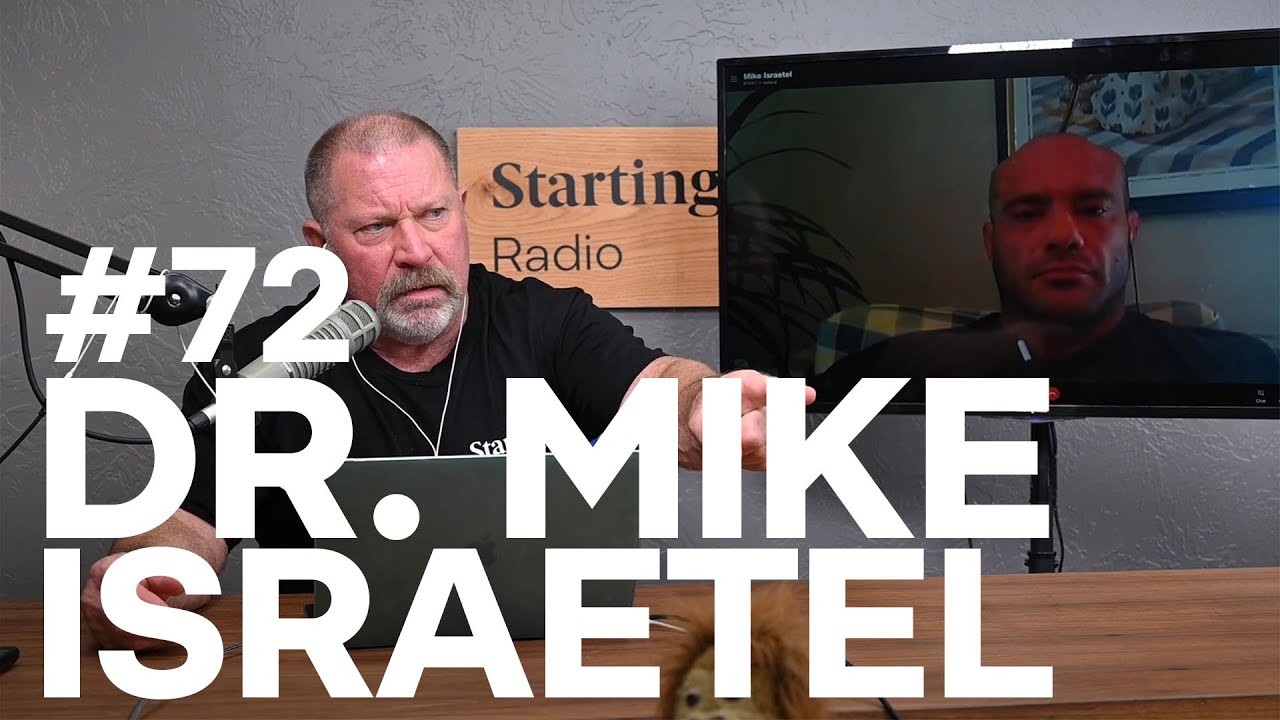
I really like the Huberman Podcasts or the ones from Dr. Mike.

Here is one from him telling how heavy someone should train:

I should also point out that they look quite jacked, so it can’t be all that wrong. But looking like that isn’t the goal for me. :wink:

I used to REALLY like Huberman but he and Attia have gone too deep down the sponsored influencer route. So while they have good info I am still a bit turned off and feel they are good for ideas but makes me nervous to trust without deeper validation.

Yes, most of us can get stronger doing anything consistently in increasing weight. So I fully agree it is not so black and white. Back in the day I got reasonably strong on 10 reps. I guess now I have just read so much that it seems commonly accepted to use heavy in the way I suggested. To failure could be 100 bicep curls to failure and that would be very light. Not trying to argue, just clarify what I mean.

Yes that video says 5-30 for hypertrophy but I think it is also important to first define where you are at in terms of strength. If you are deep squatting ~1X+ (novice up to 1.5X according to Rip) your weight then you are beyond the beginner category and the advice can change.. Most cyclist fall into the beginner category regarding strength.

Yes so it sounds like you have done enough of your own research on this stuff. Most people have not is why I was sharing. I have been studying this stuff for 30+ years and my opinion was much more mainstream for most of them. Failure/10 reps… My eyes were opened a few years ago. I realized I was more interested in healthy strength and getting more muscle secondarily. I know huberman and attia and even AI are in love with muscle mass but in deeper research I think that is semi-skewed advice as well (not completely). But your case is very specific. Not trying to claim what is best for you at all.

In the past I would have taken all these conflicting sources of info more seriously. These days I know I fall into the beginner category of strength training and Ripetoe seems to be the defacto expert in this space regarding getting strong. But like we both stated, we also can do just about anything :slight_smile: consistently and get stronger. Going ā€œheavyā€ is a good route is why I picked up on your wording.
I am passionate about strength training too… Wish I was as motivated to do it as talking about it :slight_smile:

So Dr Mike vs Rip gets more interesting. It seems like they basically agree with each other. Rip interviewed Dr Mike but specifically introduces Dr Mike as a trainer for advanced lifters. They both suggest 5-10 for beginners here. Rip would be more towards the 5 end of that and for sure more ā€œnoviceā€ focused. At the end, Mike also agreed ā€œ100% strength first.ā€ Mike gives lots of examples at the end that when coaching he was prescribing 5 to the volleyball team and if they could not get 3 then they would reduce the weight.

1 Like

I also was asking Claude (ai) what he thinks. He said going to failure is where form breaks down which increases risk. So leaving 1 or 2 reps in reserve should be safer… Again I don’t want to try to be a doctor here but claude said it they same way I think about this (and mine is set up not to agree with me :)). Just things worth discussing with your PT/Doctor if you decide you agree with any of them.

The opposite but another interesting idea is something called EDT :slight_smile: If you want a total side track and another crazy idea… Gives you HIIT and strength in one…. The idea here is you are doing 5 reps with your 10 RM (easy right?) but no its volume based and in the end you are tired and form is decreasing in quality. This goes way out of the rehab conversation context… meaning too experimental

We could go down more esoteric rabbit holes if you need/want… 1kg weights to get strong anyone?

Actually, I didn’t want to get too deep into the strength training bubble. As I said, it may well be that I’ve used the terminology incorrectly. So here’s just a very brief recap of what I do:

  • a push exercise
  • a pull exercise
  • squats
  • hip thrusts
  • Pallof press for the core

3 sets of 6-12 reps, reps taken almost to failure (leaving 1-2 in reserve); once I reach 12, I’ll increase the weight next time.

To kick off my project, I did a ramp test to estimate my FTP, and I also did a VT1 test (alphaHRV).
To my surprise, my endurance performance is relatively high, but my FTP is significantly lower than before.

FTP: 2.9 W/kg
VT1: 2.4 W/kg

I then tested this at 2.2 W/kg, which was relatively easy at 120–125 bpm, so VT1 seems to be in that range (VT1 HR cap is roughly at 135-140bpm)

I’ve also opted for a ā€˜three’ week plan. It’s quite difficult to always squeeze everything into a 7-day structure; that was also the biggest problem last week and in the planning. However, the body isn’t trained to expect something magical to happen at the turn of the week from Sunday to Monday. That’s why my training sequence will be now as follows:

  • Day 1: Cycling workout
  • Day 2: Strength training
  • Day 3: Rest

On rest days, I do light sessions almost exclusively at Z1 (walks, commutes, easy swimming). I repeat this cycle 7 times (making 3 weeks). In the last two cycles, I reduce the intensity, so it effectively becomes 2 intensive weeks (or 5 cycles) and one rest week, concluding with a test.

As I’m particularly lacking in maximum strength, the project is sure to be a success (I would have expected the VT1 threshold to be significantly lower). Let’s see how quickly I make progress, and how I might adapt the whole thing as I go along.

One more thing I forgot to mention: I’m trying to improve my sleep. That’s probably the most important part. I go to bed 9 hours before I plan to get up, and instead of doom-scrolling, I listen to a podcast (the more boring, the better :D) until I’m tired, and then I fall asleep straight away. I can’t measure it in terms of quantity or quality, but I feel much more rested.

I do the same 9 hours. Listen to audible with timer to shut off in 30-45 minutes depending on how tired I am. 90% of the time I am sleeping by the time it shuts off. Listening to Joe Friels new edition of faster after 50. Very different from previous editition. He has come from hard intensity focus to my thinking, which is more polarized most of the year, and z2 to help allow propery recovery… this just proves I know what I am talking about :slight_smile: Thank god Joe is reading my ā€œbooks.ā€ :slight_smile:

2 Likes