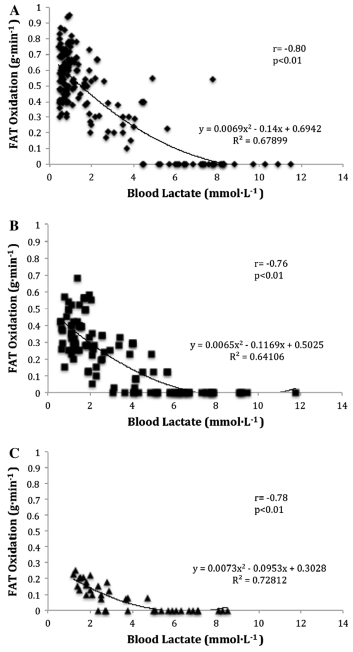
It is the principal for me. We keep hearing a narrative and when the data is available it doesn’t support the narrative.
I agree 3x20 at 85% is an effective workout, but I don’t think fat max is the reason why.
I’m not so concerned at fat max personally beyond spending about 4 years with low to very low carb and now changing dietary macros.
For all of low carb’s downsides, on the bike I was more/less bonk proof due to upregulation of fat oxidation. Most likely that has ended and riding this year will be different. Better or worse? I’m not sure.
I had seen the Coggan interview before, but at that time I was not open minded.
I listened to the Inside Exercise Coggan interview again this time with an open mind. I think he is ultimately probably right.
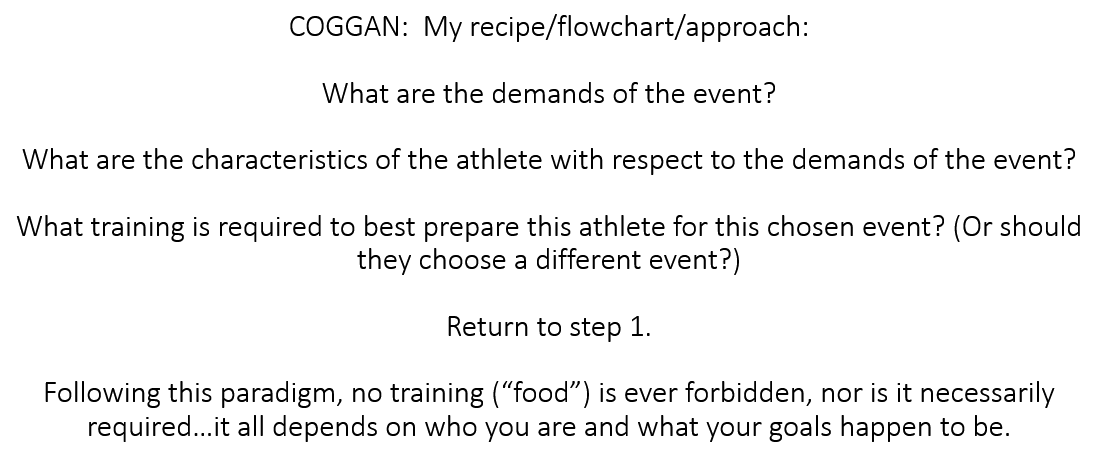
One thing about Coggan’s approach is he doesn’t actually tell you what to do. A brief summary copy pasted from his TR forum era, it all comes down to what your goals are.
It is interesting that when Coggan is around his friends (Glenn from Inside Exercise, Tim Cusick, etc…) he is quite friendly, but his online persona is very different than that.
I am not sure what you want to tell with those studies. And I am not sure if I agree to you or disagree I have a big problem with these „fixed“ markers.
To explain better, let’s begin with some of those studies. They (mostly) always lack the same issue. Maybe not in the study itself, but like you said the „influencers“ who present those later. The issue is, that the correlation of the group is broken down to the individual. As an example, you take a group, measure their HR and Fatox, and find their Fatmax at a certain level as an average of the whole group. Let‘s say the average for Fatmax for all athletes was at 72% HRmax. Now, I don‘t know if it‘s intended or not, „everyone“ is telling you, train at or below 72% HRmax. Because the study proved that. But that‘s not true. For the individual the Fatmax could be at 72% HRmax. But it could also be at 62%, or at 82%.
Then there are studies with way too less participants. Or they compare apples to bananas. I don’t know what’s the intention of the study you copied, but if you look at your red marked line in table 3. Fatox is 0.18 +/-0.18 => That‘s +/- 100%. I am not sure if that is reliable data to get any result out of it.
So I found one study some time ago, which investigated the different approaches to „estimate“ Zone 2 boundaries. So they did a ramp test and took different definitions of Zone 2 (and Fatmx btw) and compared the result, and how well they fit to the individual. And I found this quite interesting. Begin with their table:
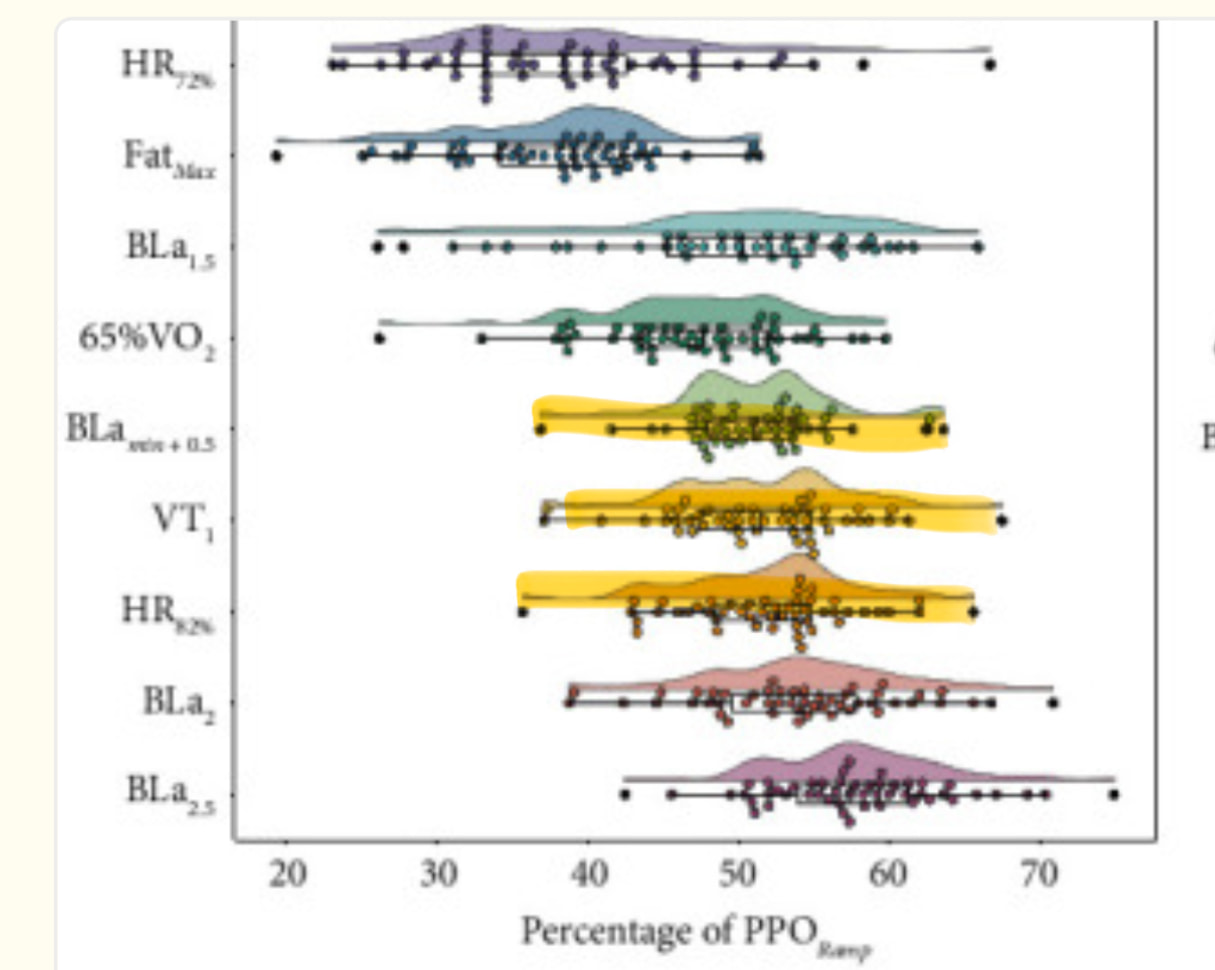
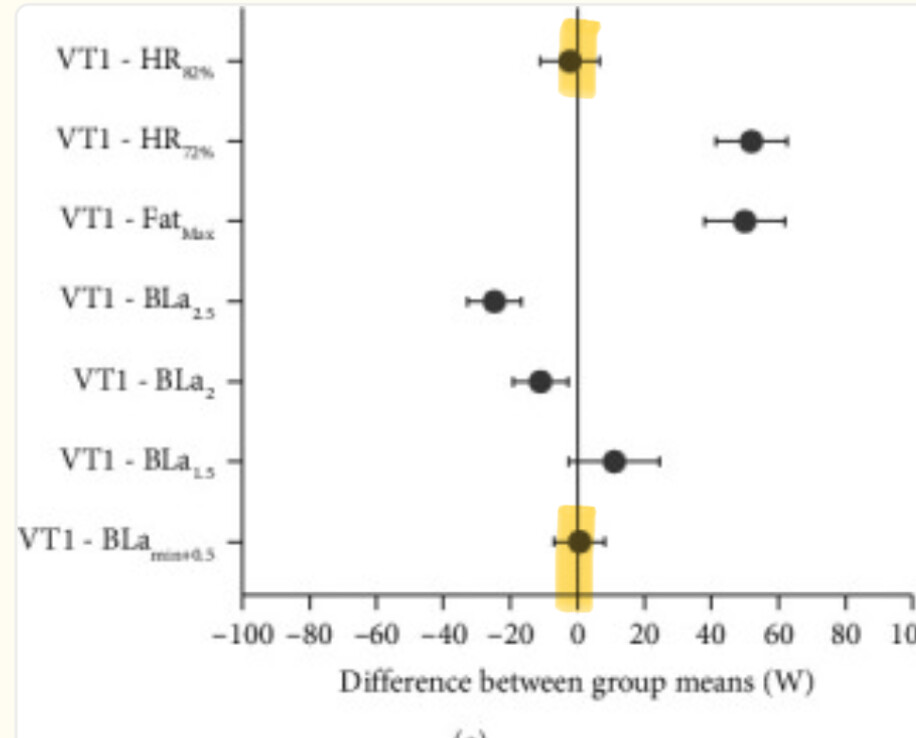
BLamin+0.5, HR82%(max) and VT1 are quite the same, aren‘t they? 200w +/- 45w. So do your workouts below 82% HRmax and you are below your VT1 (As a side mark, here you also see that Fatmax is way below VT1, I come to this again at the end). But ok, let‘s look deeper into it, as a raincloud illustration:
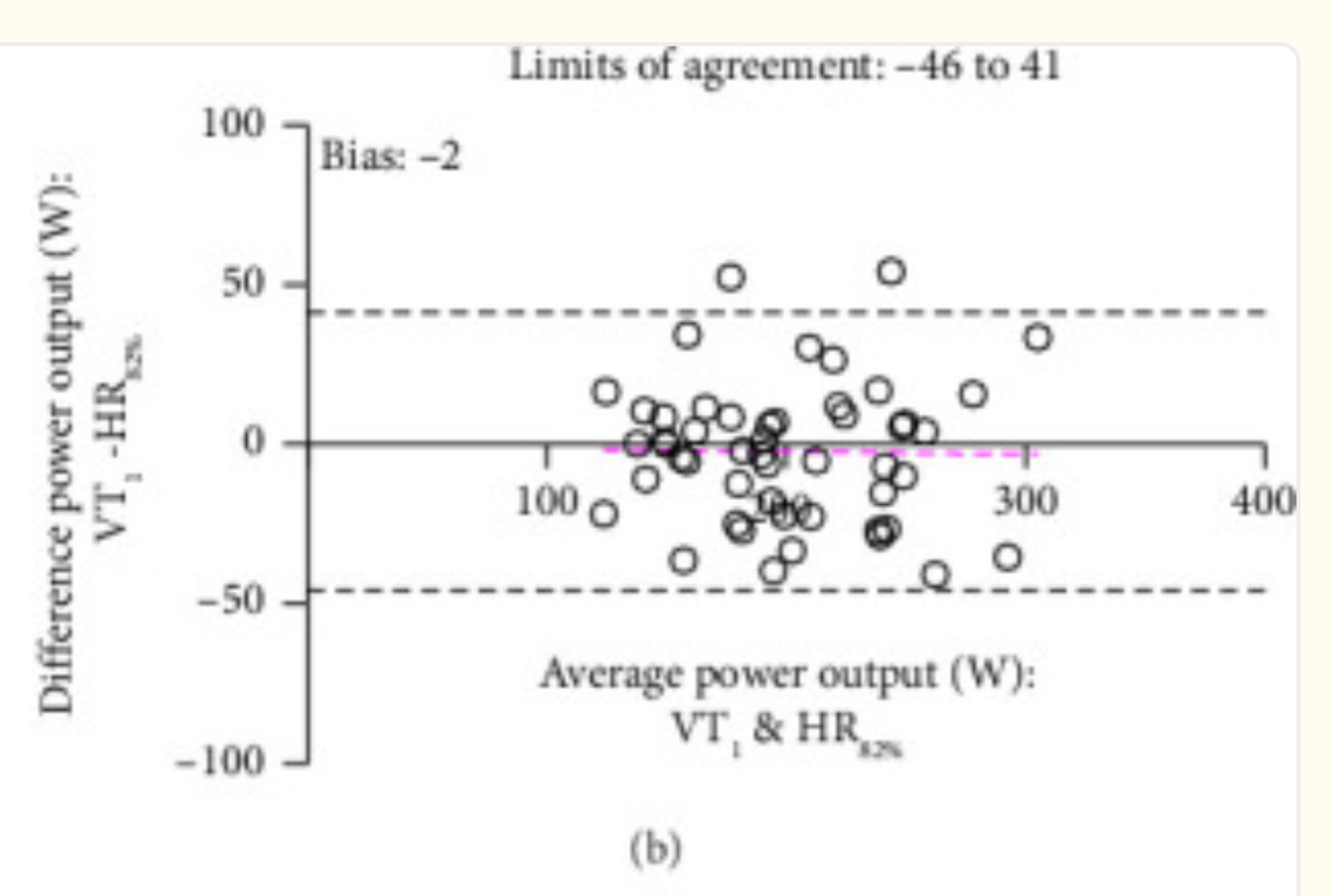
But now we go back to the individual and plot this as a Bland Altman plot with Power at VT1 vs. Power at 82%HRmax (x axis is (Power(VT1)+Power(HR))/2, y axis is Power(VT1)-Power(HR) for the individual):
Yes the average difference is 0w. So the average for the whole group is Power(VT1)=Power(HR82). But in reality there are only a couple points (this means only a couple of participants) on the 0w difference line. The whole range is more or less +/-50w difference. So if you train at 82% HRmax, this could be your VT1. Or it‘s 50w less. Or 50w more. Or something in between.
You find this study there:
So, what‘s my conclusion from that? Low Heartrate training is still beneficial. Your low HR could be my high HR. So that‘s not comparable. There is no „golden rule“. You have to find your own „boundaries“, either due to lab testing or RPE. I think RPE is still a valid measurement and maybe the most underestimated metric nowadays.
Regarding Fatmax, it‘s highly individual and it‘s depending on so much factors. So why you see those low Fatmax results in these studies (the study I‘ve linked included)? This is more an opinion, I can‘t prove it. In principle the longer you exercise, the more fat you burn at low intensities. A ramp test is relatively short. And after a short period of time at big intensities. There is just no time to switch to the fat burning mode. If you eat sugar, fat oxidation goes down. The did eat (or drink) in this study too.
I’ve come more/less to the conclusion to reject all fads and train for performance/specificity of what it is you’re trying to do. If you improve with a plan/method then maybe keep doing it, if you don’t improve then discard it and do something else.
That is beautiful. I never gave that variance between participants that much thought. I never put much weight in many studies other than some big picture concepts… Probably including some easy in your training is a good idea for most…. and some hard…
It’s a glorious day in my part of the world, the weather has improved and it looks like outdoor cycling is here to stay now and the clocks changed so sunset is nearly 7 PM now.
Time is always an issue though so 1 (maybe 2?) indoor workouts a week depending upon schedule may be a good idea.
I was giving to though to what that workout could be and I think @Ivegotabike 's idea for the 3x20 at tempo (~ 85% of an accurate FTP or equivalent heart rate that keeps the work load manageable) may be perfect for this time of the season. It helps build aerobic durability without introducing too much fatigue.
It is interesting, he did it in base season before doing intensity later and my idea is the opposite.
Good news on the weather. I have ridden outdoors twice this week and enjoyed it a lot. Here in the UK, the clocks don’t change until 29 March, so sunset is still before 1800.
There is a lot of value in keeping indoor training going through the year imo. Not just for when outdoor rides aren’t possible, but for doing specific workouts that are hard to replicate on local roads. Even if that is just once per week, it is a valuable contribution.
On the 3x20. I think it is an excellent workout.
2x30 is very good too (2x30 is not the same as 3x20) and, if there is longer available, 3x25 and 3x30 are great too.
I am currently part way through a bit of a build block, with threshold / sprints and then VO2 coming up.
Once that is done, I will work on aerobic stuff again for a block. These fatmax workouts will definitely feature.
As I have mentioned before, I prefer to do this workout in HR+. I set 81% of HRmax as target. That allows for a sneak over whilst respecting the protocol’s original 83% HRmax cap.
YMMV, but I find that as the aerobic training pays off, I get more out of the session in HR+ than with 85% FTP (i.e. I can do more than 85% FTP at 81% HR without generating too much fatigue).
 I have a big problem with these „fixed“ markers.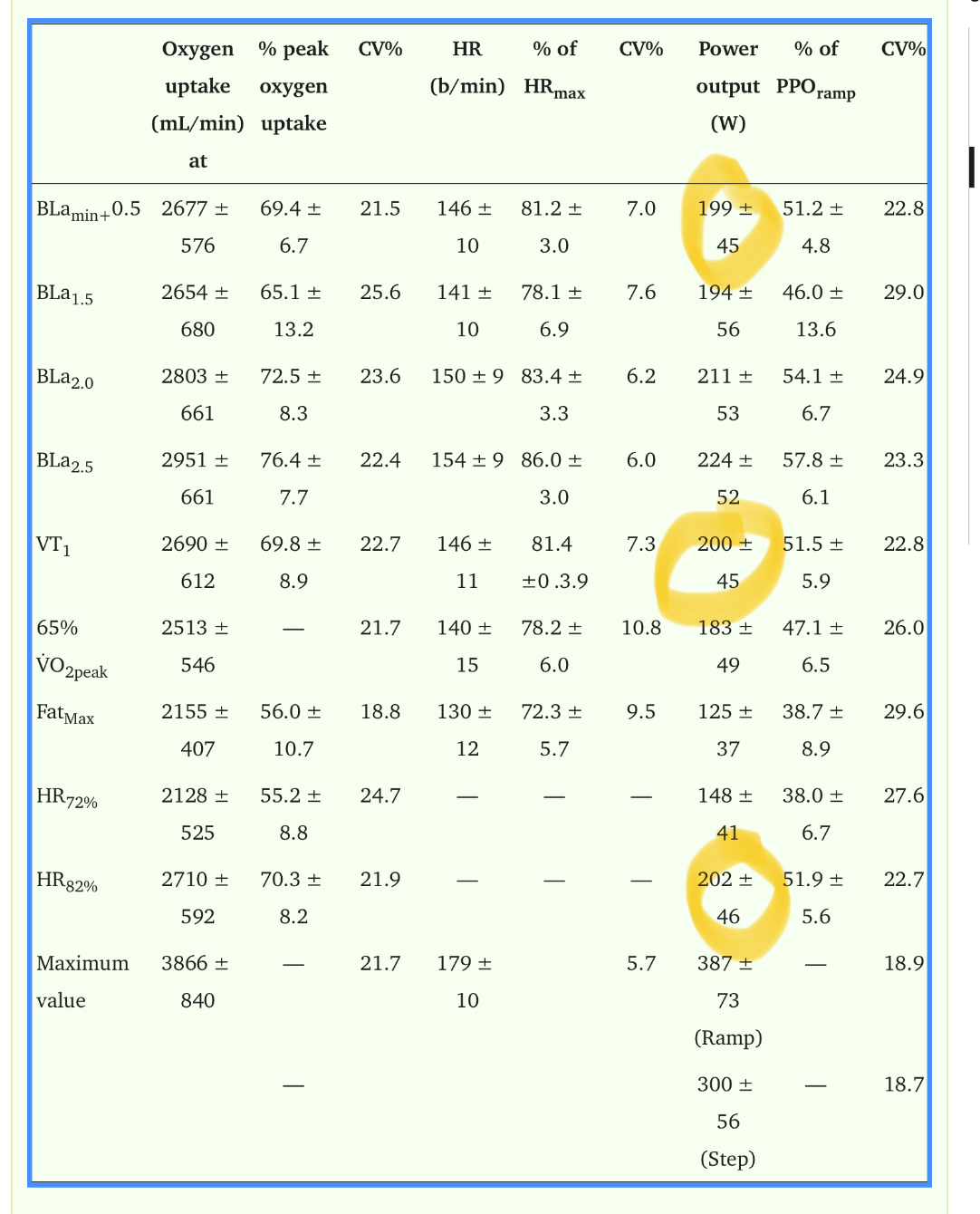
 (As a side mark, here you also see that Fatmax is way below VT1, I come to this again at the end). But ok, let‘s look deeper into it, as a raincloud illustration: