Ahahaha KOMs are for youngers 
Thanks all for the share of the podcast/bits of research. 
1 Like
Here is Ben Healy on the Roadman Podcast recently. Video is cued up to where he is asked about his use of W’Bal in pacing solo attacks, such as the one that won him that Tour de France stage.
Just 20 seconds or so for his answer 
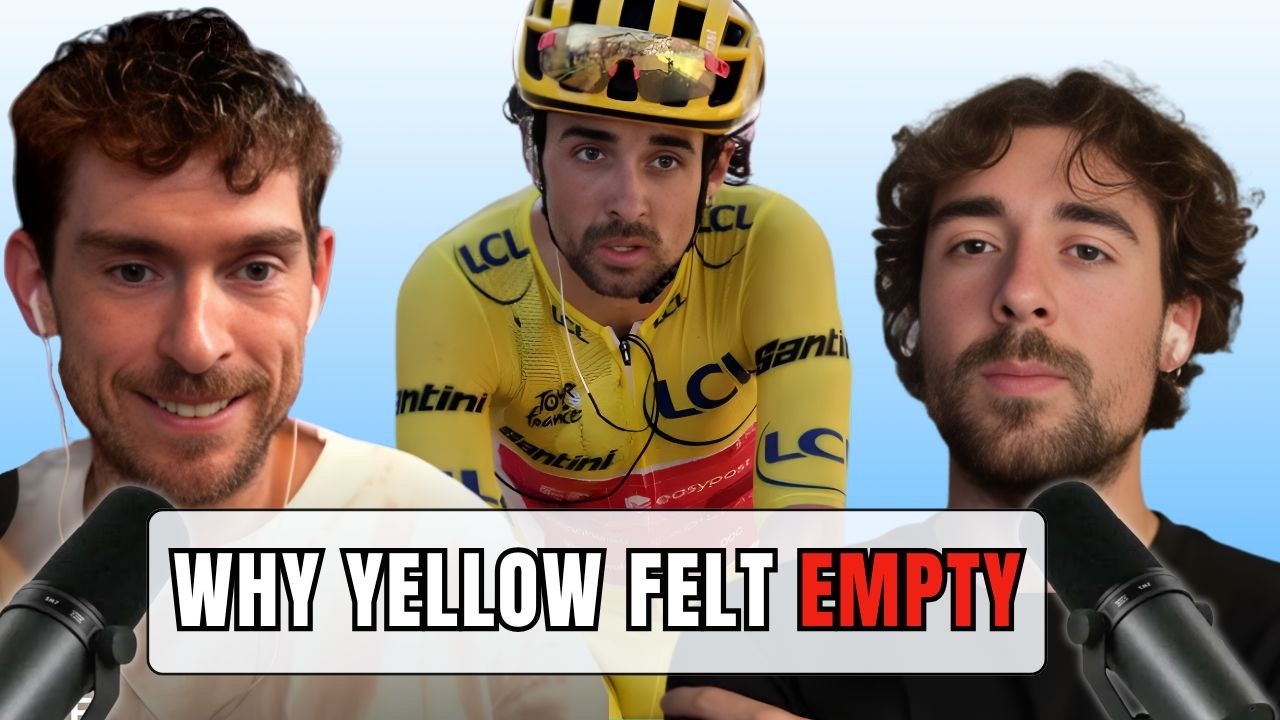
For those that prefer the transcript (directly from YT, so blame it for the translation!)
Anthony: How scientific Is the pacing for those solo moves? Are you leaning into like the WBA ball modeling and we’re seeing a lot of the world tour coaches start to
figure out. I know Dumbar use this WBA modeling with Vector for his Walta stage win. Or is it old school instinct?
Ben: To be honest, that’s the first time I’ve heard of that.

Yes, Andrea repeatedly tells me that most pro cyclists don’t know much about training, especially science. They just know how to ride a bike fast.
As he points out w’bal is considered extremely important in sub hour TT races for the top coaches but they just give the cyclists strategy of key power targets in key places and those greater than FTP in the strategic steep sections.
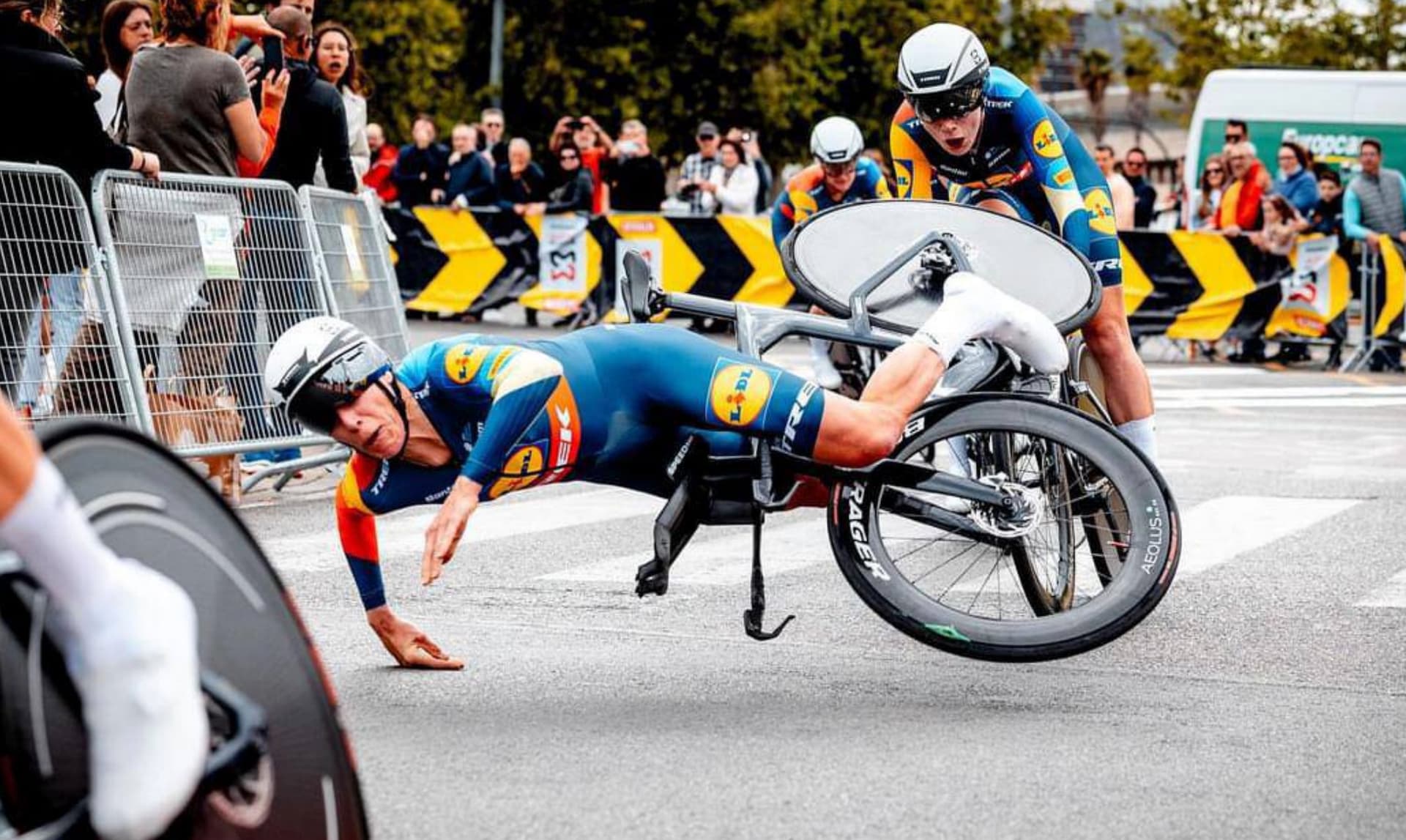
My one claim to fame was using it extensively to design a strategy for the Trek female TTT team, in which we had to design a rotation strategy where the the 49kg team lead (Gaia) could not get dropped but ideally get her to lead some sections and allowing a couple of the other riders to get dropped so 4 crossed the line. It was very complicated but they did win even with a crash.
Scary but she was not hurt.
1 Like
How significantly would the “Paris - Nice” TTT rules that, AIUI, are going to apply in the TdeF 2026 too, have changed that plan?
Is the TTT a totally different event under those rules, compared to the “4th finisher” rules?
This is only for short TTs or TTTs, if the normalized power is noticeably below CP / FTP then it probably matters like .001% You do want pacing strategies i.e. putting down more power when their is less wind in your face but the W’ aspect plays a small role.
The funny thing is I know almost nothing about pro cycling… I only know about cycling math and so Andrea just told me the rules and I wrote the code. For TTs best bike split is great but nothing exists for TTTs and you also have to deal with when corners appear vs rotations.
Because of the math we actually took a non-conventional approach to this race. I think pro TTT is always the average time of the first 4 team members across the line but I would have to ask Andrea to confirm.
Different rules were brought in for the TTT in Paris-Nice in 2023 and will apply in TdeF in 2026
There are plenty of articles about it, here is the one from cyclingnews
"The timing format for the stage 1 team time trial at the 2026 Tour de France in Barcelona has raised questions from Visma-Lease a Bike’s CEO, with it following the new TTT format seen in Paris-Nice in recent seasons, where the time is taken from the first rider across the line for each team.
For the general classification, each rider will be given the respective time they finish the 19km route, a departure from the previous format seen in 2019 and Tours de France gone by, where GC times were taken on the fourth rider crossing the finish line."
Oh interesting, 19km… Feels less team to me but I know nothing about pro cycling in general. It feels like if football (soccer) would only let one guy score goals…
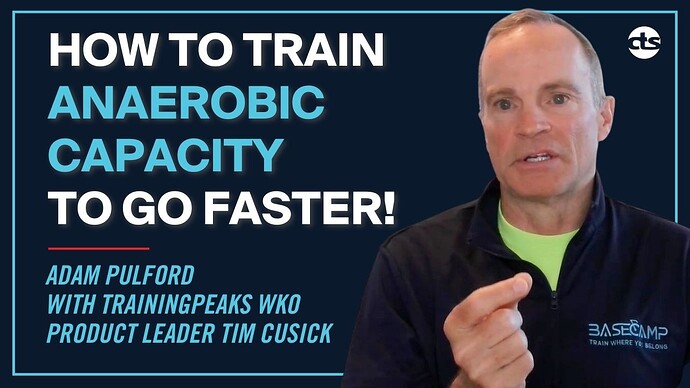
This is the final episode of a short series of 4 videos on the CTS_TrainRight youtube channel with Tim Cusick. Published between 3 Dec 2025 and 24 Dec 2025, it is a good series that covers what to include in a training plan and why.
Here is my very short summary of the whole series
“Progress your training plan from aerobic / base work, to FTP work, to VO2 work, to anaerobic work. There is a benefit to all cyclists from touching all of those areas in their training. The biggest benefit comes from the aerobic / base work.”
This episode covers the W’Bal topic: anaerobic capacity and how to train it.
TLDR - for a couple of weeks or so, do sessions with ~1 minute all out intervals. 6x - 10x with ~8mins rest between intervals.
An interesting part of the video is about recovery from above FTP efforts - recharging the anaerobic capacity (between intervals and generally).
Cusick proposes that a better trained / developed aerobic capacity improves the rate of recovery from anaerobic work. Moreover, in time crunched cyclists, who ‘don’t have the time’ to develop their aerobic capacity, that shows up when they come to do this anaerobic training.
The video is cued up to the start of that section (which is about 3 minutes long)
That is an excellent message. It’s too bad that that message isn’t more prevalent.
1 Like